
Tuesday 26th May, 2026
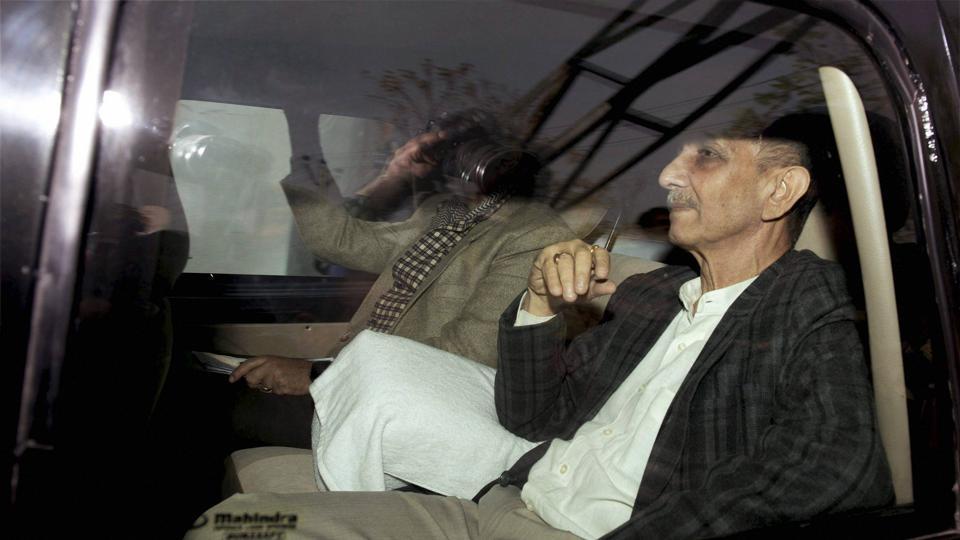
Srinagar: Most trade bodies boycotted their meetings with the Union government’s newly appointed interlocutor for Jammu and Kashmir Dineshwar Sharma who arrived in Srinagar on Monday while some of the major political players said they haven’t received any invitation for talks.
The opposition party National Conference is yet to receive an invitation from Sharma who is on a five-day visit to the state. The Hurriyat Conference which had already turned down any talks hasn’t been invited either by Sharma, a former intelligence bureau director who is on a maiden visit to the state after his appointment as interlocutor.
“There is always a formal invitation for talks. We haven’t been invited and we are not going and knocking on Mr Sharma’s door asking for appointment. Considering what happened to the earlier interlocutors’ reports, this makes the whole process doubtful,’’ NC spokesman Tanvir Sadiq told HT.
Sadiq said there is a proper mechanism of slotting meeting and extending invites in any such meetings in the past. “Last time when home minister Rajnath Singh was in Srinagar we got invites from home ministry though the Divisional Commissioner who was the nodal officer,’’ he added.
Despite repeated attempts NC president Farooq Abdullah and son Omar Abdullah could not be reached.
On Sunday, Farooq Abdullah had said that he does not expect much from the exercise of the new interlocutor.
The separatist leadership which has already dismissed the possibility of talks with the Centre “on the present premise’’ has also not received any formal invitation.
The Hurriyat, however, is clear – “invite or no invite’’ they are unlikely to meet the interlocutor.
“We have cleared our position. How will the government which is not ready to discuss autonomy, talk to us?” Hurriyat Conference chairman Mirwaiz Umar Farooq told HT.
“In earlier meeting with the centre in 2002, the context was different – India and Pakistan were talking, all the stake holders were involved. Today there is no clarity on what they want. They are just wasting time. It seems to be no more than a PR exercise,’’ he said.
The hardline faction of the Huriyat issued a statement saying “forced negotiations have no political or moral justifications’’. The Hurriyat also claimed that a state representative on intervening night of November 4 and 5 expressed his desire to meet Huriyat chairman Syed Ali Geelani to facilitate his meeting with Sharma.
However, Sharma will be calling on CPI (M) leader M Y Tarigami at his residence on November 8. Tarigami confirmed that Sharma had sought a meeting with him.
Meanwhile Kashmir’s apex trade body Kashmir Chamber of Commerce and Industries (KCCI) turned down the interlocutor’s invitations for talks on Monday.
“The organization decided to boycott the meeting as reports from previous interlocutors yielded no results. We were invited by the Divisional Commissioner but we are not meeting,’’ KCCI president Javed Tenga said
The Federation Chamber of Industries Kashmir (FCIK) also stayed away. “We are traders. If government wants to talk politics they should talk to politicians. We have spoken to people earlier but it’s of no use,’’ said FCIK president Mohammad Ashraf Mir.
House boat owners association of Kashmir and Kashmir hotel and restaurant owners’ federation also did not attend their meeting with Sharma.
Sharma’s itinerary on Monday also included meetings with the travel agents asssociation, shikara association, Gujjar and Bakerwal Conference, representatives of fruit and saffron grower association and traders bodies like KCCI and Federation Chamber of Industries Kashmir. All meetings were scheduled to take place at Hari Niwas Palace.
Official sources said Sharma will stay in the Valley for three days and spend two days in the Jammu region. His is likely to hold talks with various political parties, socio-cultural organisations, individuals and members of the civil society.
Sharma’s visit has generated mixed reactions. After 2010 unrest the central government had appointed a group of interlocutors to suggest ways for resolving the Kashmir problem. But the report was never discussed in the Parliament